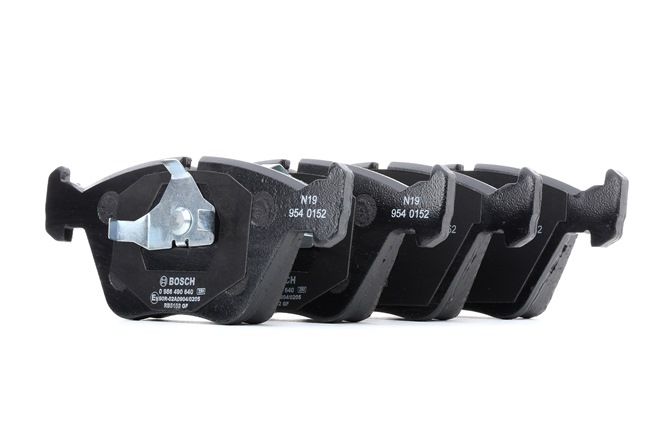
Brake pad set ATE 13.0460-6033.2 prepared for wear warning indicator, excl. wear warning contact

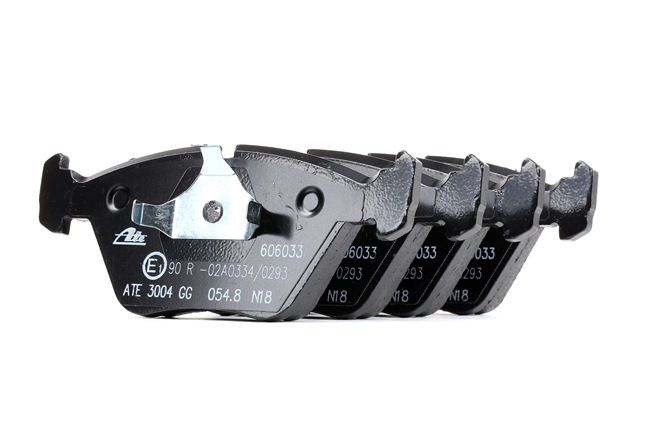


Brake pad set ATE 606033
- Wear Warning Contact: prepared for wear warning indicator, excl. wear warning contact
- Quantity Unit: Axle Set
- Height: 63,5
- Width [mm]: 156,3
- Thickness: 20,3
- Test Mark: E1 90R-02A0334/0293
- MAPP code available
- Article number of recommended accessories: 24.8190-0210.2, 24.8190-0214.2, 24.8190-0224.2
- Brake System: ATE
- Observe dimensions
- Condition: New
Check the OE number
- OE 20968 ATE
- OE 21064 ATE
- OE 606033 ATE
- OE 34 11 1 157 569 BMW
- OE 34 11 1 157 813 BMW
- OE 34 11 1 158 265 BMW
- OE 34 11 1 159 279 BMW
- OE 34 11 1 160 450 BMW
- OE 34 11 1 162 535 BMW
- OE 34 11 2 228 248 BMW
- OE 34 11 2 282 554 BMW
ATE 13.0460-6033.2 Brake Pad Set – Key Features & Performance
The ATE 13.0460-6033.2 Brake pad set delivers reliable stopping power through consistent pedal response and improved thermal stability. Mechanics often select this component for projects where rotor protection and hardware longevity remain critical operational requirements for UK road conditions. By choosing this hardware, technicians support precise braking force while effectively managing heat soak during frequent town-cycle driving.
Establishing trust through industry leading top brands
Workshop specialists favour 13.0460-6033.2 ATE for its alignment with widely trusted brands. Integrating such components into a vehicle service plan avoids the risks associated with unverified quality brands. These well-known brands undergo stringent testing protocols to verify batch consistency. By selecting these reputable manufacturers, garages confirm that the parts meet the high expectations of modern vehicle owners. Choosing best brake pad brands supports the long-term reliability of the hydraulic system.
Ensuring consistent cold performance for winter
This ATE 13.0460-6033.2 component delivers reliable cold performance immediately upon ignition. Drivers require effective when cold properties to manage traffic hazards during initial morning commutes. The friction material facilitates an immediate braking response, bypassing the delay often seen in budget alternatives. Achieving strong braking when cold requires a specific chemical compound engineered for rapid activation. Good cold bite supports the overall safety profile of the passenger vehicle during periods of low ambient temperature.
Delivering the high standards of premium class
Professional technicians identify ATE 13.0460-6033.2 Disc pads as a clear example of premium quality engineering. Being a top-tier brand, the manufacturer adheres to strict tolerances that define professional grade hardware. Most fleet managers specify OE quality components to negate the high maintenance costs associated with premature wear. Choosing a high-end solution guarantees that the friction coefficient remains stable under diverse operational scenarios. Every technician values the consistent top quality inherent in these parts compared to lower-cost market imports.
Optimised thermal stability through heat resistance
Engineers design this ATE 13.0460-6033.2 Pads set to maintain structural integrity when exposed to elevated operational temperatures. High temperature resistance is crucial for vehicles frequently traversing undulating terrain or motorways. The application of fade-resistant materials ensures the system handles high heat without losing stopping efficacy. When components are heat resistant, they protect adjacent seals and hydraulic fluid from premature thermal degradation. Consistent thermal stability represents the technical core of the friction material formulation.
Maintaining wheel cleanliness with low dust
The ATE 13.0460-6033.2 Brakes set prioritises minimal dust accumulation on the alloy surface. Modern car owners demand clean wheels to preserve the aesthetic appeal of the vehicle exterior. Reduced dust emissions also prevent the buildup of abrasive particles within the calliper housing. Effective low brake dust properties ensure that brake maintenance cycles remain predictable. This design choice results in significantly less residue on the rim over extended mileages.
Improved safety with consistent braking performance
The ATE 13.0460-6033.2 Brake pad set provides high friction performance under heavy load conditions. Achieving maximum stopping power relies on the precise balance of the pad compound and the rotor surface contact patch. Mechanics report that high braking performance is maintained even after repeated heavy applications. This specific hardware configuration ensures improved braking efficiency in emergency situations. Strong braking force underpins the overall confidence required for daily operation of modern passenger cars.
Achieving maximum durability for extended use
Workshop data indicates that ATE 13.0460-6033.2 units offer high durability in varied driving cycles. The wear-resistant material composition results in an extended lifespan, reducing the total cost of ownership. These heavy-duty pads are designed for vehicles covering significant annual mileage. Maintaining a long service life helps workshops build repeat custom through reliable part longevity. Fitting long-lasting components reduces the frequency of intrusive mechanical service intervals.
Superior pedal response and braking comfort
Precise braking is a primary objective of the ATE 13.0460-6033.2 design philosophy. Drivers appreciate the easy modulation provided during low-speed manoeuvres in congested areas. A predictable response allows for smooth braking input, which minimises passenger discomfort during stop-start travel. This component ensures controlled braking, promoting a progressive braking experience for the vehicle operator. Good pedal feel is maintained throughout the life of the friction material.
Effective management of low noise level
ATE 13.0460-6033.2 Brakes set provides quiet operation for a refined driving experience. The application of sophisticated damping shims supports squeak-free output during light pedal application. Silent braking is achieved through the exclusion of metallic debris within the friction matrix. This anti-squeal technology is essential for noise-free engagement. Low noise performance remains a critical factor for premium vehicle servicing.
ATE 13.0460-6033.2 Disc pads: Key Performance and Safety Highlights
The ATE 13.0460-6033.2 Disc brake pads represent a precise balance of mechanical efficiency and material science. This product delivers consistent results across diverse driving environments. These pads facilitate optimal safety for all light vehicle applications.
| Braking Attribute | Performance Benefit |
|---|---|
| Brand positioning | quality brands |
| Cold-start reliability | immediate braking response |
| Segment classification | top-tier brands |
| Thermal stability | fade-resistant materials |
| Wheel cleanliness | reduced dust emissions |
| Stopping power | improved braking efficiency |
| Service lifespan | heavy-duty |
| Pedal response | predictable response |
| Acoustic comfort | anti-squeal |
The implementation of ATE 13.0460-6033.2 into the braking system upholds high safety standards. This component utilizes high friction performance to ensure reliable stopping force. Technicians select this part for its well-known brands reputation.
Why the ATE 13.0460-6033.2 Brake pad set is an Excellent Choice
The ATE 13.0460-6033.2 Brake pad set achieves a high standard of OE quality that ensures customer satisfaction. By evaluating the cost-per-mile, fleet managers recognise the efficiency gained through using premium quality components. This prevents the need for early replacement due to premature degradation. Superior manufacturing standards underpin every unit produced by this manufacturer.
This technical assessment confirms that ATE 13.0460-6033.2 Brakes set provides a robust solution for vehicle maintenance. The ATE 13.0460-6033.2 Disc pads exhibit consistent behaviour across all operating temperatures. Professional mechanics should procure these components to ensure compliance with manufacturer specifications. Please contact our technical desk for stock availability and fitment verification.